In the rapidly advancing world of automotive and industrial electronics, thermal protection has become a non-negotiable safety standard for high-performance systems. This professional guide explores the technical and economic benefits of securing a PTC Thermistor Source Factory Supply to help global distributors and hardware engineers optimize their circuit protection strategies. By choosing a PTC Thermistor Source Factory Supply in 2026, businesses can ensure direct access to Positive Temperature Coefficient components that offer self-regulating heating and overcurrent protection, effectively shielding expensive sensitive equipment from thermal runaway and ensuring long-term reliability in everything from EV battery packs to smart home appliances.
The Strategic Edge of PTC Thermistor Source Factory Supply
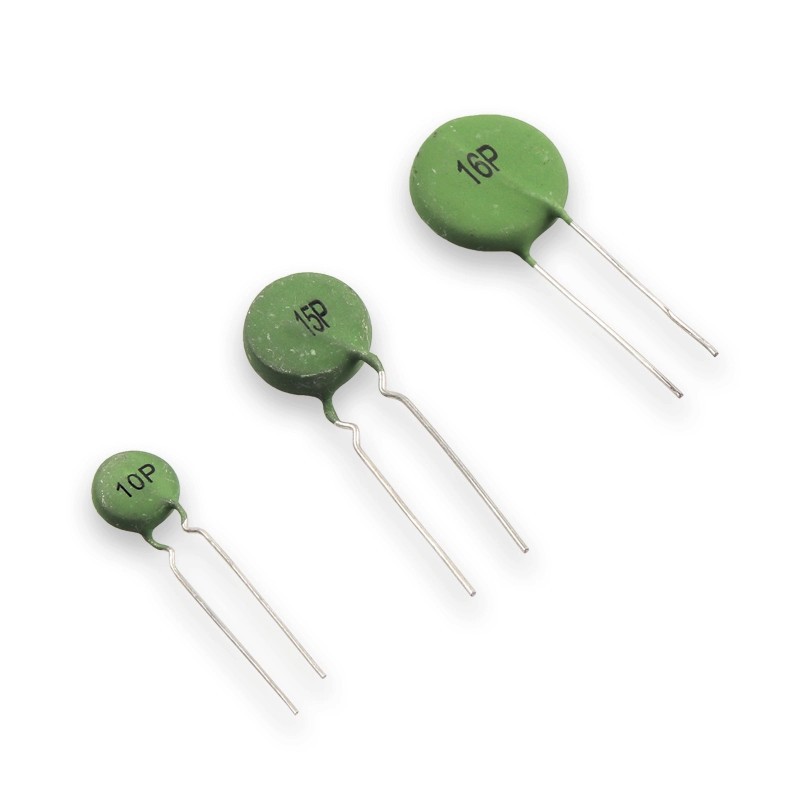
A PTC (Positive Temperature Coefficient) thermistor is a thermally sensitive semiconductor resistor whose resistance increases significantly as the temperature rises. Engaging with a PTC Thermistor Source Factory Supply partner provides a level of material consistency that is essential for precision engineering.
Why is the “Source Factory” (源头厂家) designation so important? The performance of a PTC thermistor depends heavily on the purity of the Barium Titanate ($BaTiO_3$) ceramic and the precision of the doping process. A direct PTC Thermistor Source Factory Supply utilizes advanced sintering technology to control the “Curie Point”—the specific temperature at which the resistance jumps. Without factory-level control, batch-to-batch variations can lead to inconsistent protection thresholds, which might cause a circuit to trip too early or, more dangerously, too late during a power surge.
Technical Breakdown: Applications in Modern Electronics
When evaluating your PTC Thermistor Source Factory Supply options, it is vital to distinguish between the two primary functional categories used in 2026:
1. Overcurrent Protection (Resetting Fuses)
Often used as “PPTC” (Polymeric PTC) or ceramic versions, these act as resettable fuses.
-
Functionality: When a fault occurs, the current spike heats the thermistor, causing its resistance to skyrocket and “choke” the current to a safe level.
-
Why choose this? Unlike traditional one-time fuses, these reset once the fault is cleared and the component cools down, drastically reducing maintenance costs and device downtime.
2. Self-Regulating Heating Elements
Used extensively in EV cabin heaters and industrial de-icing equipment.
-
Functionality: The PTC material is designed to reach a stable temperature and stay there. As it gets hotter, its resistance increases, naturally limiting the power draw.
-
Why choose this? This inherent “self-balancing” property eliminates the need for complex external thermostats, making the heating system safer and more energy-efficient.
Step-by-Step Guide: Verifying PTC Component Quality
If you are auditing a PTC Thermistor Source Factory Supply for a bulk procurement project, follow these rigorous technical verification steps:
-
Verify the Resistance-Temperature (R-T) Curve: Request the specific R-T graph for the component. Why? You need to confirm the “Switching Temperature” matches your circuit’s thermal limits. A steep curve indicates a high-sensitivity component suitable for safety-critical applications.
-
Inspect the Electrode Adhesion: High-quality PTCs use silver or nickel-plated electrodes. Perform a “pull test” or a thermal shock test (cycling between -40°C and +125°C). Why? Poor electrode bonding is the number one cause of “arc-over” failures in high-voltage environments.
-
Confirm UL/TUV/IATF 16949 Certification: Ensure the factory is certified for the specific industry. For automotive use, IATF 16949 is mandatory to ensure the sensors can withstand the vibrations and temperature swings of a vehicle engine bay.
Comparison: Ceramic vs. Polymer PTC Technology
| Feature | Ceramic PTC (CPTC) | Polymer PTC (PPTC) |
| Durability | Extremely High (Stable) | Moderate (May drift after trips) |
| Voltage Rating | High (Up to 1000V+) | Low to Moderate (Usually <60V) |
| Response Speed | Moderate | Fast |
| Typical Use | Heaters / Industrial Power | USB Ports / Battery Protection |
FAQ: Common Questions in Thermistor Procurement
Q: Can a PTC thermistor replace a standard fuse entirely?
A: In many low-voltage applications, yes. However, in high-voltage systems, a PTC is often used alongside a fuse to provide “soft” protection, while the fuse acts as the final “hard” fail-safe. Discussing your specific safety hierarchy with your PTC Thermistor Source Factory Supply engineer is recommended.
Q: How does ambient temperature affect the PTC performance?
A: Because they are thermal devices, a high ambient temperature will lower the “trip current.” This is called “thermal derating.” A professional factory will provide derating tables so you can size your component correctly for use in hot environments like under-hood automotive modules.
Q: What is the lifespan of a self-regulating PTC heater?
A: Since there are no moving parts or glowing wires (like in NiCr heaters), a PTC element from a quality PTC Thermistor Source Factory Supply can last over 20,000 hours without significant performance degradation.
Summary for 2026 Industrial Sourcing
Securing a reliable PTC Thermistor Source Factory Supply is a critical step for any manufacturer aiming for zero-defect production. Whether you are building the next generation of fast-charging EV stations or developing high-precision industrial sensors, the material purity and engineering support provided by a source factory are irreplaceable. By prioritizing calibrated R-T curves and robust electrode plating, you ensure that your products remain safe, efficient, and durable in an increasingly demanding market.
Keywords & Tags:
PTC Thermistor Source Factory Supply, Positive Temperature Coefficient Wholesale, Resettable Fuse Manufacturer, EV Heater PTC Elements, Ceramic PTC Sourcing, Overcurrent Protection Sensors, Barium Titanate Thermistor, Industrial Thermal Protection, IATF 16949 Thermistors, Electronic Component Supply Chain 2026